
When brands need extended content labels (ECLs), the focus is usually simple: fit more information onto the package.
But once products hit retail shelves and customers start interacting with them, the quality of the label construction becomes much more noticeable.
A peel-back label on a bottle of pain reliever might be opened every time someone checks dosage instructions. A skincare product with a long ingredient list may be handled repeatedly by shoppers standing in the aisle, comparing products. Cleaning products often need ECLs for safety information and multilingual instructions, especially when sold nationally.
In situations like these, the label isn’t just sitting on the package; it’s being used.
And over time, the difference between a standard ECL and a well-constructed one becomes pretty obvious.
At CastlePierce, we focus on how these labels actually perform after they leave the production floor. Not just the first time they’re opened, but the fifth, tenth, or twentieth time.
Why Some Extended Content Labels Break Down Faster
A common issue with lower-quality ECLs is how they’re sealed.
Many are secured mostly along the outer edges. At first, they look perfectly fine. But after repeated opening and closing, the label’s center can start to bubble or lift. The label may stop lying flat, corners can curl, and the package starts to look worn long before the product itself is finished.
This happens often on products consumers interact with regularly, like medications and cosmetics. Once the label starts lifting, it never quite goes back into place the same way again, and it changes how the product feels before someone even uses it.
CastlePierce builds these labels differently. Instead of relying only on edge sealing, we engineer adhesion across the full surface area, including the center. Open it five times. Open it ten times. The label still lies flat.
What This Looks Like in Retail
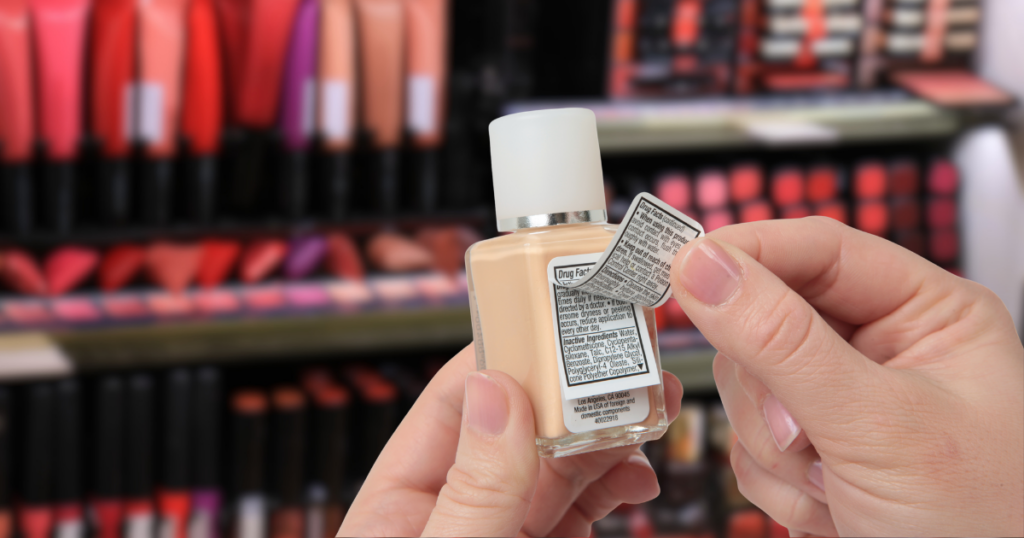
Walk through the health & beauty aisle at a big box retailer, and you can see how fast shoppers move.
If one product has a label that’s bubbling, lifting, or partially peeling away from the container, it immediately stands out, and usually not in a good way. Customers associate worn packaging with a lower-quality product. It affects how they feel about the brand before they ever open it.
On the other hand, packaging that looks clean and intact after repeated handling gives a much stronger impression. Especially in categories like OTC, personal care, and beauty, customers notice. And it affects their purchase decisions.
The same thing happens after purchase. If a customer repeatedly opens an ECL to check ingredients, directions, or warnings, they expect it to continue functioning the way it did the first time they used it.
When it doesn’t, the packaging becomes frustrating instead of helpful.
Looking Beyond the First Production Run
Many packaging decisions look fine during initial production. The real test happens later, after products move through shipping, retail handling, and repeated consumer use.
That’s especially true of ECLs, which are meant to be interacted with.
For companies managing larger retail programs, small packaging issues tend to become more noticeable at scale. A label that wrinkles or lifts after repeated use may seem minor on a single unit, but across thousands of products sitting on shelves, those inconsistencies become much easier to spot.
That’s why long-term performance matters just as much as initial appearance.
At CastlePierce, extended content labels are designed for repeat use, shelf presentation, and real-world handling. The goal isn’t a label that works once. It’s a label that performs every time.